State-of-the-Art NICU Practice: Catherine Shaker and Suzanne Thoyre

Just returned from Houston after presenting with my colleague, Dr. Suzanne Thoyre, a gifted and remarkable researcher and neonatal nurse. The attendees came from across the US to share our common passion for infant-guided co-regulated feeding in the NICU and after discharge.

Our Early Feeding Skills Assessment Tool was the framework for advancing cue-based feeding, problem-solving challenges in the NICU and beyond, getting everyone “on the same page” through a common language, and supporting parents in building a relationship with their infant through feeding. We all left renewed and empowered to be the change … and with a solid path forward.

Catherine Shaker Seminars: “Formula One” Style in Austin!

     The flagman waves the chequered flag as Red Bull's Dutch driver Max Verstappen crosses the finish of the Austrian Formula One Grand Prix in...

Formula One, part of the US Grand Prix, came to Austin in October and so did I!

The Feeding and Swallowing Team at Dell Children’s were amazing hosts! Speech-Language Pathologists and Occupational Therapists joined us from across the US and Canada to learn interactively along with each other, focusing on a wide variety of practice settings. In the Cue Based seminar, Dr Thoyre and I guided the group in higher level conversations about complex feeding challenges in the NICU and after discharge, watching and scoring videos of neonates feeding and problem-solving next steps. In the Pediatric Swallow Studies seminar, we discussed unique components of the swallow pathway across the pediatric age span, and then peeling apart the pathophysiology and its implications.  In the Advanced Dysphagia seminar, we looked at critical thinking for decision-making, problem-solving and interventions for our neonatal through school aged patients.  It was also a great opportunity to share ways of navigating the practice challenges that each of us faces on a daily basis. It reminded us that we are not alone. One attendee commented: “I feel rejuvenated and validated in my practice, and our conversations reinforced my values as a clinician. ” We all walked away feeling renewed.

Problem-Solving with Catherine: 5-year-old with Athetoid Cerebral Palsy

QUESTION: I work in an outpatient pediatric rehab setting and recently saw a 5-year-old boy with athetoid cerebral palsy (CP) and frequent tonic reflex. His suck-swallow-breathing coordination is poor (multiple suckles followed by multiple swallows, then gasp for air), wheezes heavily, and often he has difficulty clearing his phlegm, has poor lingual range/control, uses phasic bite when foods presented. Parents have not had a VFSS done before.
 His parents “force” feed him with bread, which often stays in his tongue/sides of roof of his mouth. With thin liquids fed with a bottle, anterior spillage occurred (he can’t seal with his lips). Except for liquids (bottle-fed) he is often in distress during mealtimes. My other colleagues reported that he was also fed with rice. I tried educating parents and demonstrated to them how he handles puree and thickened milk much better, but they were against the recommendation, and stated that what I interpreted as distress (e.g., tensing/tightening his lips, head turn, increased tonic reflex, protesting (tensed vocalization) during mealtimes, and crying), is just him trying to eat. They claimed that whenever he attempts to do anything, that’s him tensing up, so they continued to ignore my advice and called my observation a ‘cookie cutter’ statement from textbook, which doesn’t apply to their boy. They said the child has never choked with bread all these years, why stopped him now?
I’ve observed him smiling and relaxed when he’s in comfort, and in my experience, if a diet is too difficult for a non-verbal child to manage, these are signs of distress.  He is quite intentional with his communication (smiles and looks at you if he wants an action/object), it’s hard for me to understand where his parents’ perspective.
I wanted to run by you to see if I might have misinterpreted this child’s body cues. What other strategies can you use to convince parents?
I referred them for a VFSS, so they can at least ‘view’ what’s happening when their child’s eating.
CATHERINE’S ANSWER:

Our children with athetoid cerebral palsy typically present with complex swallowing/feeding challenges similar to those you describe and are very often fragile feeders. Their lack of postural stability and excessive postural mobility provide a poor base of support for the head/neck and oral motor/laryngeal/pharyngeal control along the entire swallow pathway. What you are seeing is indeed worrisome related to the swallow-breathe interface, likely caused by “problems down the line” as part of an overall unstable hyolaryngeal and esophageal complex. This affects not only chewing but the foundations for even swallowing saliva with integrity, and, as such, can often create the perfect storm for airway invasion, both silent and symptomatic. Safety of his liquid swallows is very likely adversely affected as well, especially given that the tongue plays a key role in liquid control and transport. The anterior spillage you describe has many aberrant components beyond lip control that likely do impact swallowing integrity and safety, as the entire system must work together in synergy. He likely lacks the stability and control for any solids, both purees (that may lead to stasis after the swallow) and the “pieces” that likely disperse and can be “underperceived” by a sensory system that is also likely adversely affected, given the overall neuromotor picture. The overt distress behaviors you have witnessed are a typical constellation with this diagnosis and its functional implications. His behaviors to some extent reflect what we call adaptive behavior, i.e., refusals and struggle that likely reflect his fear, learned discomfort and indeed possible airway invasion, that then lead to maladaptive feeding/swallowing behaviors. For families, this long-observed feeding behavior has perhaps become what they see as “just him” when he eats or drinks… much like an NICU nurse who at times may view the excessive WOB and tachypnea we witness at feedings with an infant with CLD as “just who the baby is”. But we know that, who that baby or child “is” is indeed worrisome. It reflects risk and is not then “ok”, when it comes to airway protection and indeed neuroprotection, for both children with complex co-morbidities, and for infants.

I suspect this little guy has learned to “struggle through” his parents’ well–intentioned feeding approach, sadly. They don’t understand his feeding behavior and its actual significance, which is his communication to them. And they are likely still grieving the loss of the normal child their hearts expected, so your thoughtful and likely quite accurate assessment of risk is something they may not want to hear, which is understandable in many ways. Our hearts go out to them.

Trust your instincts. The VFSS will be important to help them see the “why” behind his struggles. They are fortunate to have you in his corner.

Problem-Solving with Catherine: Infant in NICU with HIE

Ohio HIE Lawyers | Infant Hypoxic Ischemic Encephalopathy

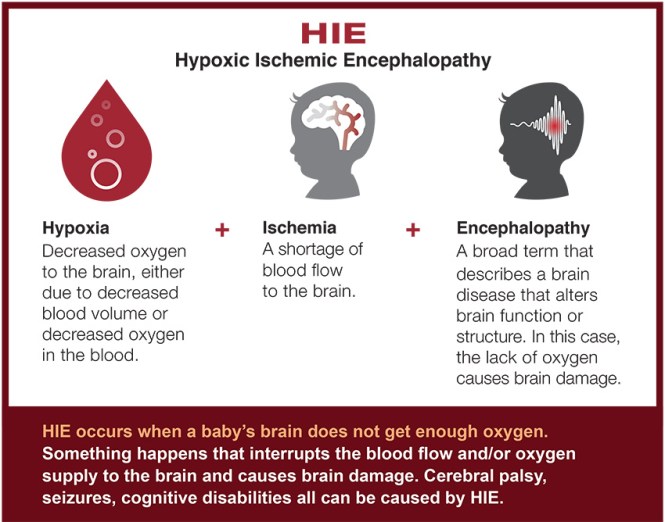
QUESTION: I have a little patient that experienced prolonged hypoxia at birth and has been diagnosed with HIE grade 3. This patient is currently on oxygen via Nasal cannula and there is retraction during breathing. Also, notable secretions on the lips and pooling in the oral cavity of these secretions. When I went to assess the suck with my gloved finger, even with oral stimulation, no suck was elicited. This patient is currently on NGT feeds. Would you recommend the use of a pacifier to help with the suck and if so, which pacifier is recommended (I’m not too sure which literature to consult on this so any suggestions are appreciated). The hospital I work at does offer the option for instrumental assessment, but they will only do a barium swallow (not even a modified), so I will suggest this and know the patient will likely be for a PEG long term, but any advice and suggestions would be great 🙂

As a side note, the hospital I work at is very under resourced and we don’t have access to great equipment or specialists like pulmonologists which does limit intervention options.


CATHERINE’S ANSWER:

Sounds like this little one has complex neurological sequelae due to the HIE. The absent suck suggests there is also no active tongue movement for initiating or driving a swallow. I suspect her gag/pharyngeal responses are blunted as well. That affects ability to mobilize secretions/saliva posteriorly, to clear the pharynx and move the saliva away from the laryngeal inlet. This constellation of impairments is due to the overlapping function of the cranial nerves that support suck-swallow-breathe, which also “take a hit” as a group when there is hypoxia or ischemia in the newborn. I suspect infant also has diffuse postural hypotonia which provides a poor base of support for the hyolaryngeal musculature, blade and base of tongue, and muscles of respiration. High risk of ongoing silent aspiration of saliva/secretions due to motor and sensory impairments. Likely unable to generate a cough when needs to. Without a swallow response, we would not take infant for a swallow study as we would likely passively see barium invade her airway. Also we clinically see the behaviors s/o an absent swallow.

The history provided is quite helpful for us to problem solve. The clinical presentation as I understand it, in the setting of the infant’s history and co-morbidities, suggests a very poor prognosis for establishing even safe saliva swallows in the near future. I would recommend work up for a G-Tube and Nissan (as she is also at high risk to aspirate refluxate if there is EER, which is more likely given postural hypotonia). Continued intervention via providing postural stability, offering own hands to face/mouth, facilitating rooting response (which is also likely absent), providing deep pressure input to the biting surfaces, to the intrinsic tongue muscles and base of tongue muscles, f/b functional input with your gloved finger and then standard shaped pacifier to facilitate rhythmical responsive lingual movements. It’s a combination of oral-motor, oral-sensory and neurodevelopmental treatment to support motor learning. Intervention will be based on a thoughtful process and change will be slow, based on what we understand so far about the infant’s back story. The pieces we don’t know about birth history, intra-partum and post-partum infant response,  Apgars, how long intubated, progress with state modulation and progress to date neurologically, would all help refine our differential and, I suspect, likely make infant’s prognosis even more worrisome. We offer parents guarded optimism, in that the infant’s story is not written yet and some of our infants amaze us. Early intervention, including ST, PT and OT, and follow through by a supportive family will be key to optimizing progress.


Research Corner: Congenital Heart Disease and Vocal Fold Immotility

Congratulations to our pediatric colleague, Christine Rappazzo, for this wonderful addition to our evidence base related to the potential impact of the need for heart surgery on airway protection in our infant population. This, combined with the documented increased risk for R vocal fold motion impairment post ECMO in this population, helps us to advocate for our involvement in safe progression to PO for these vulnerable infants.

Citation: Narawane, A., Rappazzo, C., Hawney, J., Clason, H., Roddy, D. J., & Ongkasuwan, J. (2021). Vocal Fold Movement and Silent Aspiration After Congenital Heart Surgery. The Laryngoscope.

Abstract

Infants who undergo congenital heart surgery are at risk of developing vocal fold motion impairment (VFMI) and swallowing difficulties. This study aims to describe the dysphagia in this population and explore the associations between surgical complexity and vocal fold mobility with dysphagia and airway protection.

Methods

This is a retrospective chart review of infants (age <12 months) who underwent congenital heart surgery between 7/2008 and 1/2018 and received a subsequent videofluoroscopic swallow study (VFSS). Demographic information, Society of Thoracic Surgeons-European Association for Cardio-Thoracic Surgery (STAT) category of each surgery, vocal fold mobility status, and VFSS findings were collected and analyzed.

Results

Three hundred and seventy-four patients were included in the study. Fifty-four percent of patients were male, 24% were premature, and the average age at the time of VFSS was 59 days. Sixty percent of patients had oral dysphagia and 64% of patients had pharyngeal dysphagia. Fifty-one percent of patients had laryngeal penetration and 45% had tracheal aspiration. Seventy-three percent of these aspirations were silent. There was no association between surgical complexity, as defined by the STAT category, and dysphagia or airway protection findings. Patients with VFMI after surgery were more likely to have silent aspiration (odds ratio = 1.94, P < .01), even when adjusting for other risk factors.

Conclusion

Infants who undergo congenital heart surgery are at high risk for VFMI and aspiration across all five STAT categories. This study demonstrates the high prevalence of silent aspiration in this population and the need for thorough postoperative swallow evaluation.

This will inform your pediatric practice whether in the inpatient or community pediatric setting.


Learning about Feeding/Swallowing: An International Pediatric Perspective

I was thrilled to welcome new SLP friends from Europe who traveled to Chicago to learn along with me! Florentine (left) from The Netherlands, and Heida (right) from Iceland.  Between them, they traveled over 7000 miles to be with me for 5 days. Despite our geographic distance, our infant and pediatric patents are so similar, as are the challenges we face each day. Their approaches and physician/institutional influences really are not all that different but their wisdom in thriving with different and less abundant resources were an eye opener for all of us. International perspectives on feeding and swallowing always round out conversations at my courses. It has been my pleasure over the years to welcome an ENT from Saudi Arabia, a pediatric dentist from Japan and in-the-trenches therapists from other far way places including Spain, Greece, the UK, South Africa, Australia, India, The United Arab Emirates, Ireland and Israel. Needless to say, my brain is on fire after the chance to share our passion for helping infants and children with feeding and swallowing problems. And it is great to have contacts for future problem-solving that literally span the globe! Safe travels to my new friends, Florentine and Heida!

Pediatric Swallowing/Feeding: “We are all in this together!”

I just returned from teaching in Chicago for 5 days at Advocate Aurora Healthcare.  What an amazing pediatric team they have…engaged, thoughtful and embracing both the evidence base and the value of problem-solving. We were joined by therapists from across the US and Europe for conversations about our shared challenges …complex infants and children who land on our doorsteps, navigating swallow studies with physician colleagues, implementing IDDSI, fostering cue-based feeding in a volume-driven culture, GI co-morbidities from FTT through  ARFID in kids, the latest information on aspiration in the pediatric population, risks for feeding on CPAP/HFNC, enduring impacts of neurologic sequalae, and integrating motor learning as the foundation for rehabilitating and habilitating the swallow from infants through adolescents, and so much more. We all came away with new ideas, new data, new perspectives and a resounding sense that we are all in this together as pediatric swallowing and feeding specialists! We can do this!

Practicing at the Top of Your Profession in Feeding/Swallowing

An SLP asked recently, “What resources, articles, courses, etc. did you find helpful when you were first learning infant feeding? I’m looking for something to give me what I really need.”

“My seminars” I told her, “are designed to do just that. When I created them, and as I update them, I always think ‘What do I wish I had known, both research and clinical information, to practice in peds dysphagia when I started out? What is essential to work toward practicing at the top of our professions?’  My NICU and Pediatric as well as Advanced seminars, my Peds/ Neonatal Video Swallow Studies and Cue Based seminars are filled with everything I want to pass along. As I learn from colleagues and attendees at my courses, I weave that in as well. Sometimes I almost run out of time!

I will always offer you a welcoming environment that fosters interaction and learning along with each other.


Problem-Solvers Join Catherine Shaker for Advanced Learning Opportunities

Such a wonderful group joined me in Atlanta last week! Here are some of the amazing problem-solvers from Childrens Heathcare of Atlanta and from across the US who came together for my Cue-based Feeding and Advanced Infant/Pediatric Dysphagia seminars. It was a great opportunity to apply critical thinking to neonates and children through school-age/adolescence with feeding and swallowing challenges. Everyone’s brains were “on fire” as I like to say, with conversations about complex co-morbidities, navigating swallow studies and case discussions.

I hope to see you at one of my next offerings in Chicago, Austin or Houston!

Click here to download Shaker 2022 On-Site Seminars Brochure

Click here to Register

Celebrating the Promise of Cue Based Feeding for our Infants

Dr. Suzanne Thoyre,  a gifted, acclaimed NICU researcher and neonatal nurse, joined me this weekend at Childrens Healthcare of Atlanta for our Cue-based Feeding seminar. We shared our insights and evidence-based feeding practice from a combined nearly-100-years of practice in the NICU. Therapists from across the US and Canada learned along with us to explore infant-guided assessment and intervention and develop a common language in the NICU to support neuroprotection and better feeding outcomes for infants who require intensive care. One of the attendees noted: “As out NICU team continues to transition to cue-based feeding, we will be better able to establish treatment plans for our little ones and have the team on the same page.”

We hope to see you in Austin (October) or Houston (November) for this exceptional learning opportunity.

Click here to download Shaker 2022 On-Site Seminars Brochure

Click here to Register

Problem-Solving: RR and PO Feeding in the NICU

QUESTION: I have a 33wker with a VSD that nursing is PO feeding every feeding. Are there studies regarding respiratory rate while feeding? The infant looked comfortable at 65 and below but I told nursing to stop feeding with rate above 80 (or allow major rest break for her to slow it down because she’s often cueing).  I’d love hard data to support those numbers

ANSWER:

I don’t know of any randomized controlled trials that yielded this data. Clinically we know that spontaneous RR is typically different than monitored RR, due to an artifact created by the monitor not consistently sensing rapid shallow breaths. We gather he best data by counting the spontaneous breaths, as it’s more reliable. Anytime the RR is above 60 we know there is greater risk, as it takes a second to complete the pharyngeal swallow. RR over 60 increases risk that the swallow and breathing will co-occur or “collide” as I like to say to parents. Work of breathing often goes hand in hand with the RR but can often be a more worrisome indicator of risk for airway invasion. As the effort goes up, breaths are more shallow, there is then less tidal volume, and the infant is more likely to need an urgent breath. In those moments, the need to breathe will override the swallow. Often this means opening the airway too early or not fully closing it at the moment of the swallow. Because NICU infants are at higher risk to silently aspirate, the infant described may show no outward signs. We know he is a 33 weeker – which means to me that he was born at 33 weeks. What is his PMA? Or are you meaning he is now 33 weeks PMA; if so, what was his GA? Helps me make sense of his risk. The VSD will drive up WOB and RR at baseline, and with the aerobic demands of feeding. Does he have an otherwise unremarkable history except for VSD? Currently requiring respiratory support? What are saturations like with PO? What physiologic and behavioral stress signs do you see even with interventions? What interventions are the nurses using to protect him? Perhaps having you offer guided participation while a nurse feeds and you think along with her, might build a conversation about airway protection and neuroprotection, both of which are likely at risk given what we know.

Problem-Solving: 2 -year-old with Pierre Robin Syndrome

Question: I have a complex case I have been following since her time at our NICU. She is 2 years old, and I just completed a repeat VFSS (outpatient, her seventh to date) which continues to show significant dysphagia with high aspiration and airway obstruction risk.

History is significant for Pierre Robin sequence (chromosome deletions at 10q11 and 20p12) and cleft palate. She was born full term but required intubation after birth for critical airway. She required mandibular distraction hardware placement for about 2 months, has required supplemental nutrition by means of a feeding tube since birth (has had a PEG for over a year), and had a bilateral palatoplasty around 18 months of age. She’s been followed by feeding therapy, but despite recommendations for NPO because of her significant risks, she really wants to eat and drink. She pulls food off of the table from her siblings’ plates and has been eating/drinking regular/thin without specific correlation to any respiratory compromise.

I wish I could insert a fluoro clip here as I think it will be hard to spell this out… her swallow is significantly uncoordinated. With all consistencies the bolus reaches the pyriforms and at the onset of her “swallow” she presents with immediate regurgitation to the oral cavity and nasopharynx. No barium enters the esophagus with the initial swallow, it almost appears that the timing of UES relaxation follows tongue base retraction after the majority of contents have been redirected from the hypopharynx. This sequence is repeated 18 times prior to what appears to be a complete swallow, during which the contents that weren’t incidentally passed through the UES are cleared through the pharynx. Laryngeal penetration and aspiration at the height of the swallow occur during most of the uncoordinated “swallows” (which is silent). The pattern is the same with all consistencies and is paired with an open mouth posture. When provided with tactile cueing to keep her lips closed, she appears to have the coordination/pressures needed to clear small boluses with single swallows, but her adaptations seem to drive the motor planning train at this point. I ethically could not proceed with solid foods even though mom called two months ago to ask if we could ‘try solids no matter what’ during the study… they had hot dogs for dinner last night and brought pieces of hot dog to the study today. I have no explanation for how a choking event did not happen.

My heart really goes out to this family; they need a lot of guidance, and it has been a journey for them. Our oral maxillofacial surgeon and gastroenterologist have agreed to have a sit-down care conference with the family which I am extremely grateful for… my question is in regard to where to go from here. I think she needs intensive feeding therapy at this point and the clinics that I am most familiar with in our area are behaviorally driven to help kids wean from tube feedings… but she is a special case in which she really wants to eat and drink but is not safe to do so… does anyone have any specific cleft palate clinics that they have worked with? Mom is very open to this and was very open to me posting the patient’s case here to get some ideas for them.

Superior based pharyngeal flap surgery is in the discussion, but until her adaptive “swallows” are not the driving force of her function, I don’t see how she will safely manage as I think her ability to redirect boluses into her nasopharynx are her saving grace (as strange as that sounds).

Any and all help/insight is appreciated.


Answer: The infants and children we see never cease to amaze me with their adaptive behavior to accomplish a task in the face of such challenges. Bonnie Martin Harris always reinforces the dynamic nature of the swallow pathway, and how alterations in one point along that pathway can create compensatory behaviors along the pathway that may not always be beneficial but may indeed be maladaptive behaviors. What is the source of the alteration versus the compensatory behavior always needs to be sorted out, and you have done that so very well!

I have had three children with similar clinical and videofluoroscopic presentations. They each had mandibular hypoplasia, only one had the benefit of mandibular distraction. The impact of mandibular hypoplasia on motor learning in utero is not always fully appreciated. Early on, it creates muscular and structural restrictions to base of tongue integrity (decreased ROM, decreased posterior prolusion, decreased BOT retraction for the dynamic swallow). The fetus swallows amniotic fluid from 17 weeks on, and so by birth at term, has had 23 weeks of motor learning to help build the motor maps that underpin the swallow. Mandibular hypoplasia leads to reduced oral cavity space, this displaces the tongue body, leads to an altered tongue position, typically retracted back into the oral cavity and often with some form of glossoptosis; it also can create muscle shortening that will impede full ROM for the necessary base of tongue retraction. Even post MDO (Mandibular Distraction Osteogenesis), many infants continue to show reduced BOT retraction on VFSS for this reason. That’s why MDO is not a “fix all” for Pierre Robin sequence or mandibular hypoplasia, with its attendant alterations in muscular function, though MDO is unfortunately viewed as such by some medical professionals (i.e., “the infant was distracted, why doesn’t he eat?”). The co-occurring open mouth posture likely adversely affects an anterior seal on the bolus, which, along with reduced BOT retraction, acts as another impediment to generating the pressure required to relax and open the UES. The resistance to bolus flow causes the bolus to take the path of least resistance. The need to establish the more typical motor plan in order to habilitate (or maybe even rehabilitate at this point despite her young age) feeding skills is important.

Working on an anterior seal (lots of fun ways to do that at her age) and pressure generation with smaller boluses would be helpful. I wonder if a short repeat study to objectify optimal viscosity/viscosities for pressure generation might be informative, and like a short biofeedback for her, if she is cognitively appropriate, and perhaps to objectify the impact of optimal cueing strategies, utensils and neuromotor facilitation provided. Pharyngeal manometry to better objectify the role of pharyngeal pressure generation in bolus flow.

I so appreciate your critical thinking and living in the gray zone as I like to call it; where you are ok with pausing to think of possibilities, weighing them and asking more questions, instead of rushing to an answer. I’d be happy to work alongside each of you anytime.

Research Corner: Swallowing Biomechanics in Infants with Feeding Difficulties

Variability in Swallowing Biomechanics in Infants with Feeding Difficulties: A Videofluoroscopic Analysis by Laura Fuller, Anna Miles, Isuru Dharmarathn, Jacqui Allen1 (2022) Dysphagia – published online March 2022

This just published paper adds to our evidence and understanding about the dynamic infant swallow.

Abstract

Clinicians performing feeding evaluations in infants often report swallow variability or inconsistency as concerning. However, little is known about whether this represents pathological incoordination or normal physiologic variance in a developing child. Our retrospective study explored quantitative videofluoroscopic measures in 50 bottle-fed infants (0–9 months) referred
with feeding concerns. Our research questions were as follows: Is it possible to assess swallow to swallow variability in an infant with feeding concerns, is there variability in pharyngeal timing and displacement in infants referred for videofluoroscopy, and is variability associated with aspiration risk? Measures were taken from a mid-feed, 20-s loop recorded at 30 frames per second. Each swallow within the 20-s loop (n=349 swallows) was analysed using quantitative digital measures of timing, displacement and coordination (Swallowtail™). Two blinded raters measured all swallows with strong inter-rater reliability (ICC .78). Swallow frequency, suck-swallow ratio, residue and aspiration were also rated. Variability in timing and displacement was identified across all infants but did not correlate with aspiration (p>.05). Sixteen infants (32%) aspirated. Across the cohort, swallow frequency varied from 1 to 15 within the 20-s loops; suck-swallow ratios varied from 1:1
to 6:1. Within-infant variability in suck-swallow ratios was associated with higher penetration-aspiration scores (p<.001). In conclusion, pharyngeal timing and displacement variability is present in infants referred with feeding difficulties but does not correlate with aspiration. Suck-swallow ratio variability, however, is an important risk factor for aspiration that can be
observed at bedside without radiation. These objective measures provide insight into infant swallowing biomechanics and deserve further exploration for their clinical applicability.

New Shaker Publication: Aerodigestive changes for feeding and swallowing in the neonatal intensive care unit (NICU)

I am pleased to announce my new publication on aerodigestive challenges for preterm and sick newborns who require neonatal intensive care. Supporting safe and successful feeding and swallowing in the setting of aerodigestive co-morbidities requires thoughtful reflection from multiple perspectives, to help us navigate both therapeutic differentials and interventions. The article addresses:  considerations post-extubation, the potential impact of HFNC and CPAP, supporting feeding readiness in fragile infants, stridor, PMV trials, a protocol for NICU infants requiring long-term tracheostomy, and the contribution of instrumental assessment via videofluoroscopic swallow studies. Should be available on the Passy-Muir website soon.

Shaker, C.S. (2022) Aerodigestive changes for feeding and swallowing in the neonatal intensive care unit (NICU). Passy Muir’s Aerodigestive Health Volume 5 Issue 1; 35-42.

Click here to go to Passy Muir website education and download article

Research Corner: The Effect of Severe Intraventricular Hemorrhage on the Biorhythms of Feeding in Premature Infants

Gewolb, I. H., Sobowale, B. T., Vice, F. L., Patwardhan, A., Solomonia, N., & Reynolds, E. W. (2021). The Effect of Severe Intraventricular Hemorrhage on the Biorhythms of Feeding in Premature Infants. Frontiers in Pediatrics, 870.

Background: Suck-swallow rhythmicity and the integration of breathing into infant feeding are developmentally regulated. Neurological injury and breathing abnormalities can both impact feeding in preterm infants.

Objective: To determine the effects of neurologic injury independent of effects of
disordered breathing on feeding biorhythms in premature infants

Conclusions: We have previously shown that the suck-swallow-breathe rhythms and patterns in preterm infants with bronchopulmonary dysplasia (BPD) differ significantly from those in low-risk
preterm infants (14–18). This has raised the question as to whether the dysrhythmias and abnormal coordination patterns noted in infants with BPD are caused by difficulty breathing
or by the often-concomitant underlying neurological injury commonly seen as co-morbid conditions (such as IVH) in medically complex preterm infants. Neonates with BPD often have IVH or other markers of neurological injury; thus, it is important to differentiate the dysrhythmic effects of neurological injury from any direct respiratory effects of BPD on infant feeding, since a specific “signature” in feeding in infants with neurological issues pointing to a more
vulnerable population would allow resources to be targeted.

Severe IVH has a negative impact on the biorhythms of suck, suck and suck-swallow in preterm infants 35–42 weeks PMA. If a preterm infant with IVH but without BPD at 35–42 weeks PMA
lacks adequate feeding biorhythms, there could be a need for additional workup to identify possibly undetected neurological injury. The independent effect of severe IVH on feeding rhythms
suggests that quantitative analysis of feeding may both reflect and predict neurological sequelae, and perhaps points to a critical period where intervention may be most efficacious.